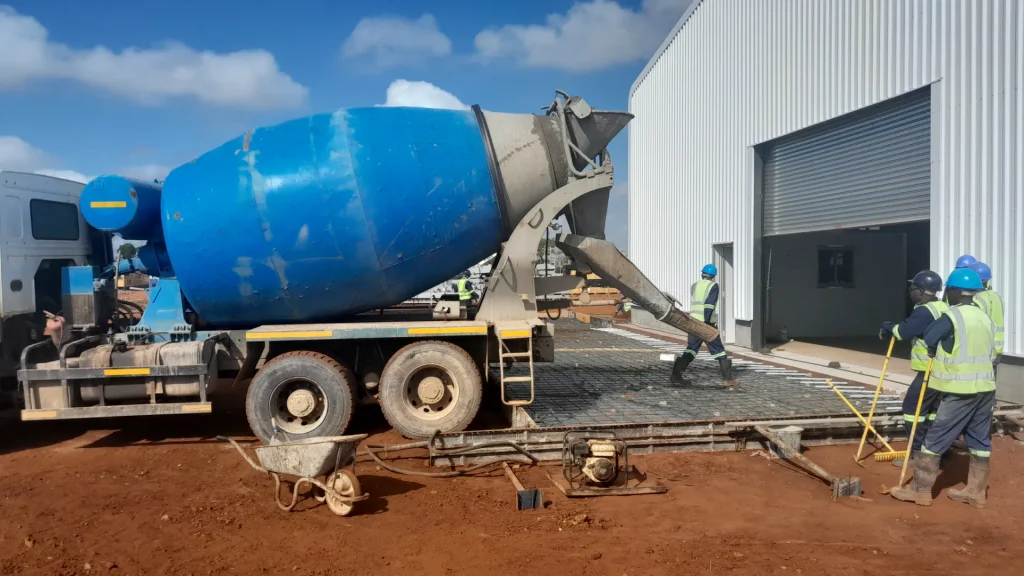
The slab–prefab gap is one of the most common causes of delays, rework, and disputes on modular and prefabricated building projects.
It happens when the building package and the civil works are treated as separate scopes, but nobody properly coordinates the interface between them.
The building supplier assumes the slab will be correct.
The civil contractor assumes the building can be adjusted on site.
The project team assumes both parties are aligned.
Then the buildings arrive, and the slab does not match the building.
That is the slab–prefab gap.
What the Slab–Prefab Gap Means
The slab–prefab gap is the mismatch between the prefabricated building requirements and the actual site foundation or slab conditions.
It can include levels, dimensions, hold-downs, service penetrations, plinths, drainage, set-out, access, and installation readiness.
On remote projects, this gap becomes expensive quickly because rework, delays, remobilisation, extra labour, and missing materials are harder to solve.
Why It Happens
The slab–prefab gap usually happens because the project is split between different scopes.
The building supplier focuses on the modular building.
The civil contractor focuses on concrete and earthworks.
The services contractor focuses on electrical, plumbing, drainage, or HVAC.
The project manager assumes the interfaces have been covered.
But unless someone clearly coordinates the interface, the gap remains hidden until installation starts.
Common Slab–Prefab Problems
Incorrect Slab Dimensions
The slab may be too small, too large, out of square, or not aligned with the modular building layout.
Even small dimensional errors can affect wall alignment, fixing positions, drainage, access, and final finishes.
Incorrect Levels
If the slab is not level, the building may not sit correctly.
This can affect door operation, wall alignment, roof drainage, internal finishes, floor junctions, and service connections.
Poor Drainage Falls
Remote site buildings need drainage planned around the building layout.
Incorrect falls can create water ponding, wet-area problems, erosion, damp, and long-term maintenance issues.
Wrong Service Entry Points
Electrical, plumbing, drainage, water, data, HVAC, and wastewater connections must align with the building.
If service entries are in the wrong place, the project may need cutting, coring, rerouting, or redesign on site.
Missing Hold-Down Details
Some buildings require specific anchor points, cast-in items, base plates, fixings, or hold-down locations.
If these are not coordinated before the slab is cast, installation can be delayed or compromised.
No Clear Finished Floor Level
Finished floor level affects access, ramps, thresholds, drainage, external paving, plinth heights, and connection to surrounding works.
If this is not defined early, practical access and water management problems follow.
Inadequate Access Around the Slab
The building may need space for cranes, forklifts, trucks, installers, scaffolding, temporary works, and material laydown.
A slab can be technically complete but still not ready for installation.
Why the Problem Is Worse on Remote Sites
Remote sites reduce your margin for error.
On an urban site, a mistake may be fixed with a quick supplier visit, extra labour, local materials, or short-notice equipment.
On a remote site, every correction is harder.
Remote Site Consequences
- Delayed installation
- Standing time for cranes or labour
- Rework to concrete or services
- Extra transport costs
- Missing materials
- Poor workmanship under pressure
- Disputes between contractors
- Programme delays
- Compromised quality
- Late occupation of camp facilities
The slab–prefab gap is not a minor coordination issue. It can affect the entire project schedule.
The Civil Works Must Match the Building System
Different building systems need different foundation strategies.
A flat pack modular building may need specific support points, lifting access, anchoring, and service routes.
RapidCabin may require a different site preparation approach because more assembly happens on site.
RapidSpan may require a more conventional slab, foundation, or structural base depending on the span, use, and building life.
The foundation should be designed around the selected system, not guessed before the system is confirmed.
The Building Supplier Must Provide Clear Requirements
The building supplier should provide clear information before civil works proceed.
Required Information
- Building footprint
- Structural support points
- Anchor or hold-down requirements
- Finished floor level
- Slab tolerance requirements
- Service entry locations
- Wet-area drainage requirements
- External drainage assumptions
- Plinth or footing requirements
- Installation access requirements
- Crane or lifting requirements
- Hold points before installation
If this information is not issued clearly, the civil contractor is forced to make assumptions.
Assumptions create risk.
The Civil Contractor Must Build to the Building Requirements
The civil contractor must not work from generic assumptions.
The slab or foundation must be built to suit the building system.
Civil Readiness Requirements
- Correct dimensions
- Correct levels
- Correct set-out
- Correct service penetrations
- Correct drainage falls
- Correct foundation details
- Correct concrete strength
- Correct curing period
- Clear access around the slab
- Safe working area for installation
- Completed hold-point inspections
A slab is not ready just because concrete has been poured.
It is ready when it meets the building installation requirements.
Services Must Be Coordinated Before the Slab Is Cast
Services are often where the slab–prefab gap becomes visible.
If plumbing, drainage, electrical, data, water, HVAC, and wastewater requirements are not coordinated before the slab is cast, the project may need avoidable rework.
Services to Coordinate Early
- Water supply
- Wastewater
- Drainage
- Electrical supply
- Distribution boards
- Data and communications
- HVAC penetrations
- Fire systems
- Hot water
- Ventilation
- External lighting
- Earthing
- Generator or backup power interfaces
Services coordination must happen before installation, not during crisis management on site.
Wet Areas Increase the Risk
Ablutions, kitchens, laundries, clinics, and change rooms create more slab and services risk than dry buildings.
They involve water, drainage, floor falls, plumbing, ventilation, waterproofing, and maintenance access.
Wet-Area Risks
- Drain points in wrong locations
- Insufficient floor falls
- Poor wastewater routing
- No access for maintenance
- Bad threshold detailing
- Water ponding near the building
- Ventilation not coordinated
- Hot-water system not allowed for
- External drainage ignored
Wet areas need more coordination than normal accommodation or office areas.
Battery Limits Must Be Clear
The slab–prefab gap often exists because nobody defines responsibility properly.
Every proposal should make the battery limits clear.
Battery Limits to Define
- Who designs the foundation?
- Who builds the foundation?
- Who checks the foundation before delivery?
- Who provides the building set-out?
- Who confirms finished floor level?
- Who coordinates service penetrations?
- Who supplies cast-in anchors or fixings?
- Who offloads the building?
- Who supplies the crane?
- Who installs the building?
- Who connects services?
- Who tests and commissions?
- Who signs off handover?
If the battery limits are unclear, the project team inherits the risk.
How to Prevent the Slab–Prefab Gap
The solution is not complicated, but it requires discipline.
The building system, civil design, services, and installation plan must be coordinated before construction starts.
Step 1: Select the System Before Final Civil Design
Do not finalise the slab before the building system is confirmed.
Different systems have different foundation and installation requirements.
Step 2: Issue Building Interface Drawings
The building supplier should provide interface information showing footprint, support points, anchor requirements, service points, finished floor assumptions, and installation requirements.
Step 3: Hold a Civil–Building Coordination Review
The project team, civil contractor, building supplier, and services contractor should review the interface before the slab is built.
Step 4: Set Hold Points
Create hold points before concrete pour, before building delivery, and before installation.
Do not deliver buildings to a site that is not ready.
Step 5: Inspect Before Dispatch
Where possible, confirm slab readiness before the building leaves the factory or dispatch point.
This prevents expensive waiting time and site improvisation.
Slab–Prefab Coordination Checklist
Before buildings are dispatched, confirm:
- Building footprint approved
- Foundation design coordinated
- Slab dimensions checked
- Levels checked
- Finished floor level confirmed
- Set-out confirmed
- Drainage falls checked
- Service penetrations coordinated
- Anchor or hold-down details confirmed
- Concrete strength confirmed
- Curing period complete
- Access roads ready
- Crane pad or offloading area ready
- Laydown area ready
- Services trenches coordinated
- External drainage considered
- Installation team briefed
- Battery limits agreed
- Hold-point inspection completed
How RapidBuild Handles This
RapidBuild treats the civil-building interface as a project risk, not an afterthought.
The goal is to review the building system, site conditions, foundation requirements, services, logistics, and installation method before the project is locked into the wrong assumptions.
The right building system still needs the right site preparation.
A good modular building can fail if the slab is wrong.
Conclusion
The slab–prefab gap is avoidable.
It happens when civil works and prefabricated buildings are planned separately without proper interface control.
On remote projects, this gap becomes expensive because mistakes are harder to fix, delays are harder to recover, and rework costs more.
The solution is early coordination.
Select the system. Define the interface. Coordinate the services. Set the hold points. Confirm site readiness before dispatch.
That is how project teams prevent small slab assumptions from becoming large site problems.
Start With a Project Review
If you are planning prefabricated or modular buildings for a remote project, start with a project review before locking in the slab, foundation, or civil assumptions.
RapidBuild will review the building requirement, site conditions, foundation interface, services, and installation method before recommending the next practical step.